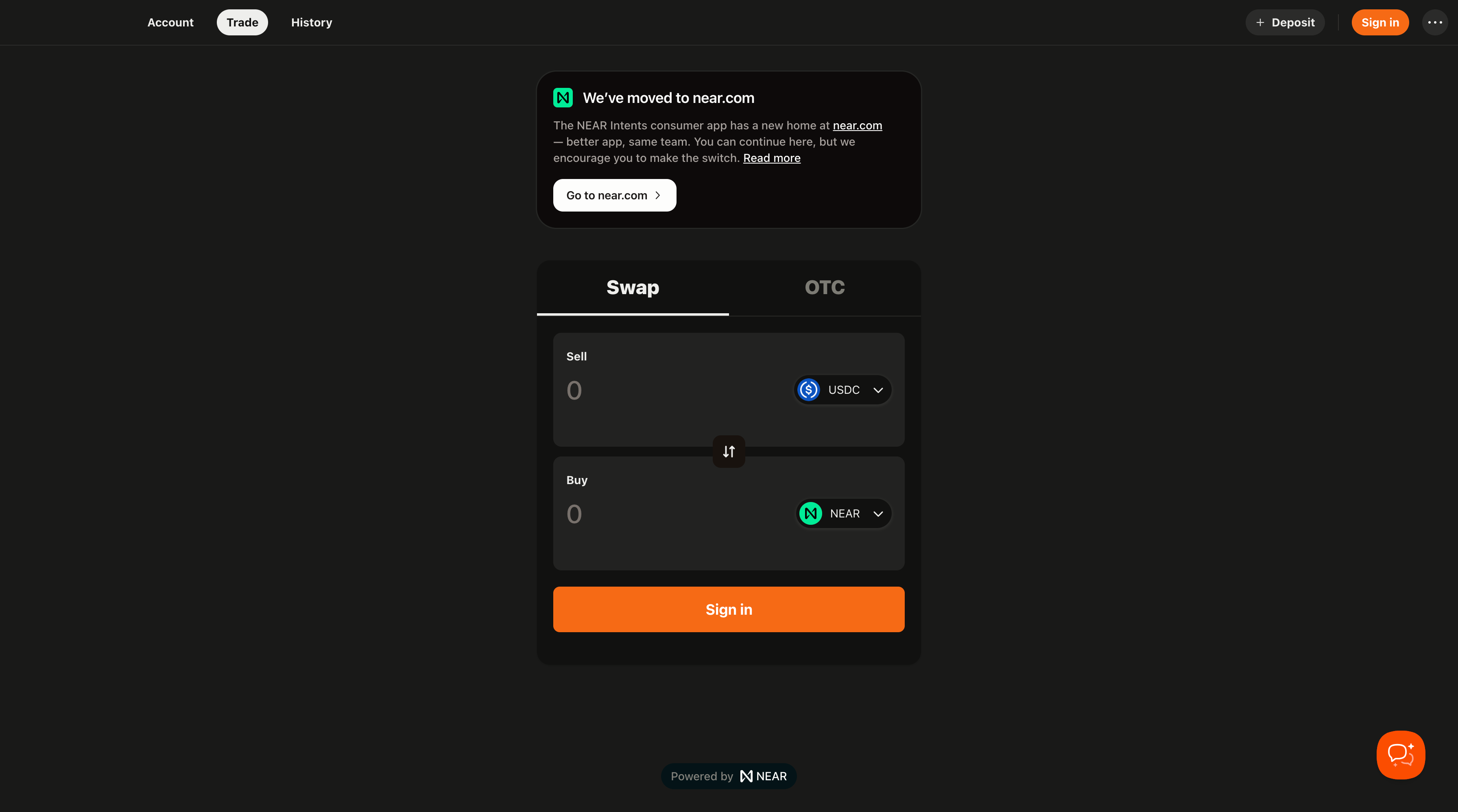
Blockchain technology has made remarkable progress over the last decade. We have decentralized finance, NFTs, onchain gaming, cross-chain bridges, and increasingly sophisticated smart contract ecosystems. Yet despite all this innovation, one major problem remains: using Web3 is still too hard for most people. Users must understand wallets, gas fees, token approvals, bridges, slippage, liquidity routes, and chain-specific mechanics. These frictions are acceptable to experts, but they remain a barrier to mainstream adoption.
This is the context in which NEAR Intents has emerged as an important idea. Rather than forcing users to manually execute every step of a blockchain interaction, NEAR Intents allows them to express the outcome they want, while a network of solvers or executors figures out the best way to achieve it. In simple terms, users no longer need to ask, “Which chain should I use? Which bridge is safest? Which route is cheapest?” Instead, they can say, “I want to swap this asset for that asset,” or “I want to pay this person,” and the underlying system handles the complexity.
NEAR Intents represents a broader shift in blockchain design: from transaction-based UX to intent-based UX. This shift may prove as significant as the move from command-line computing to graphical user interfaces. It changes not just how users interact with applications, but how developers design the infrastructure beneath them.
An intent is a high-level declaration of what a user wants to accomplish, without specifying every technical step required to do it. In a traditional blockchain transaction, the user signs a precise action: send tokens, call a smart contract method, approve a spender, or bridge funds from one chain to another. Every detail must be known in advance.
With intents, the user instead specifies a desired result. For example:
“Swap 100 USDC for the best available amount of ETH.”
“Move my funds to another chain and buy a token there.”
“Pay a merchant in stablecoins using whichever asset I already hold.”
“Complete this cross-chain transaction with minimal cost and delay.”
These are not direct instructions to the blockchain in the old sense. They are goals. The system then relies on third parties, often called solvers, to compete or coordinate in fulfilling those goals. The best solver finds an efficient path, executes it, and delivers the promised outcome to the user.
This model abstracts away many of the painful layers of Web3. It is particularly useful in a multichain world, where assets and liquidity are fragmented across many ecosystems. Instead of requiring users to manually navigate this fragmentation, intents let them describe the destination and leave route optimization to specialized actors.
The NEAR ecosystem has long emphasized usability, scalability, and abstraction. NEAR’s account model, focus on developer friendliness, and commitment to chain abstraction make it a natural environment for intent-centric applications. NEAR Intents is not simply another DeFi product; it aligns with a broader NEAR vision of making blockchain interactions feel as smooth as Web2 applications.
One of the strongest reasons NEAR is well positioned is its focus on chain abstraction. In the future, users may not care which blockchain their assets sit on. They will care about outcomes: buying, selling, lending, paying, or interacting with apps. NEAR Intents fits this future perfectly because it treats the underlying chains as infrastructure rather than user-facing destinations.
By removing chain-specific complexity, NEAR Intents can help transform NEAR into a coordination layer for cross-chain activity. Instead of being just one blockchain among many, NEAR can function as an interface layer where intents are expressed, matched, and settled efficiently.
At a high level, the process behind NEAR Intents can be understood in a few steps.
First, the user creates and signs an intent. This intent describes the desired outcome rather than a rigid sequence of actions. It may include conditions such as the minimum acceptable amount to receive, preferred timing, or cost constraints.
Second, the intent is broadcast to a network of solvers. These solvers are entities that watch for user intents and determine how to satisfy them. They may source liquidity from decentralized exchanges, centralized exchanges, bridges, or their own inventory. Because multiple solvers can compete to fulfill the same intent, users may benefit from better pricing and execution quality.
Third, the chosen solver executes the necessary operations. This may include swaps, bridges, transfers, or bundled actions across multiple chains and protocols. The complexity is handled behind the scenes.
Finally, the user receives the expected output, ideally with a better experience than if they had to perform every step manually.
This architecture is powerful because it creates specialization. Users focus on goals, while solvers focus on execution efficiency. Just as search engines organize information and ride-sharing apps coordinate transportation, intent systems coordinate blockchain execution on behalf of users.
Solvers are central to the intent model. They can be thought of as sophisticated market participants that interpret user goals and compete to satisfy them. Their job is to determine the optimal route between the user’s starting point and desired outcome.
For example, suppose a user wants to convert an asset on one chain into another asset on a different chain. The user may not know whether the cheapest path involves a direct bridge, a swap on the origin chain followed by a transfer, or a two-step route through a highly liquid intermediary asset. A solver, however, can evaluate these options in real time.
The presence of solvers introduces market-driven efficiency. Since solvers may compete for order flow, they have incentives to offer better prices, faster execution, and lower costs. This can produce a more user-friendly and economically efficient ecosystem.
However, the solver model also raises important questions around trust, decentralization, and fairness. Systems must ensure that solvers cannot exploit users, censor certain transactions, or deliver poor execution without consequences. This means intent systems require strong design around verification, settlement guarantees, and dispute resolution.
The appeal of NEAR Intents lies in several key advantages.
1. Better User Experience
This is the most obvious benefit. Users no longer need deep technical knowledge to perform complex actions. They simply specify what they want. This lowers onboarding friction and opens blockchain applications to a much wider audience.
2. Chain Abstraction
NEAR Intents helps hide the complexity of multichain environments. Users do not need to understand which chain has the relevant liquidity or which bridge to use. The system abstracts that away.
3. Efficient Execution
Since solvers can compete and optimize routes, users may receive better pricing and lower costs than if they manually execute transactions. Professional execution becomes a service layer.
4. Composability
Intents can combine multiple steps into a single user request. A user could bridge, swap, and deposit into a protocol through one intent rather than several disconnected transactions. This makes decentralized applications feel much more integrated.
5. Mainstream Potential
Mass adoption of blockchain technology likely depends on making it invisible. Most users do not want to learn protocol mechanics. They want reliable outcomes. Intents move Web3 closer to this model.
Despite its promise, NEAR Intents is not without challenges.
Solver Centralization
If only a small number of solvers dominate the network, power could become concentrated. This would undermine the decentralization ethos of blockchain systems. A healthy intent ecosystem must encourage many independent solvers.
Trust and Security
Users need confidence that solvers will fulfill intents honestly and that funds will be safe throughout execution. Poorly designed systems could create opportunities for fraud, front-running, or failed settlement.
Economic Complexity
Intent systems involve auctions, pricing models, inventory risk, and cross-chain settlement assumptions. Designing these incentives correctly is difficult. If incentives are misaligned, execution quality may suffer.
Regulatory Questions
Because solvers may resemble brokers, market makers, or payment facilitators, intent-based systems may attract regulatory scrutiny in some jurisdictions. The legal treatment of these actors may evolve over time.
Transparency
One of blockchain’s promises is transparency, yet abstraction can sometimes make systems feel opaque. Users may appreciate convenience, but they also need visibility into how their intents are fulfilled and what tradeoffs are being made.
The significance of NEAR Intents extends beyond NEAR itself. It reflects a broader industry trend toward outcome-oriented blockchain infrastructure. Many of the biggest UX problems in crypto come from exposing too much complexity to end users. Intents offer a framework for hiding unnecessary details while preserving the benefits of decentralization.
This is especially important in a future where users interact across many chains, rollups, and application-specific environments. In such a world, manual coordination becomes unsustainable. Intent systems can serve as the orchestration layer that unifies fragmented ecosystems.
NEAR’s contribution here may be especially notable because it is pairing the intent model with a wider philosophy of chain abstraction. If successful, this could position NEAR as a gateway through which users access multichain liquidity and services without needing to care about the underlying architecture.
For developers, NEAR Intents could also simplify application design. Instead of building rigid transaction flows, developers can build around user goals. This can lead to more intuitive apps and open new categories of services where execution is outsourced to specialized actors.
For businesses, the implications are equally significant. Payments, remittances, ecommerce, gaming, and digital asset platforms all benefit when transactions become easier and more reliable. A merchant, for example, may simply want to be paid in stablecoins, while customers may hold many different assets on many different chains. Intents can bridge that gap invisibly.
NEAR Intents represents an important evolution in blockchain user experience. By shifting the focus from manual transaction construction to desired outcomes, it addresses one of the biggest obstacles to Web3 adoption: complexity. Instead of forcing users to understand every step of a cross-chain or onchain workflow, NEAR Intents allows them to express what they want and let solvers handle the rest.
This model has enormous potential. It can reduce friction, improve execution, abstract away chain boundaries, and make decentralized applications feel dramatically more accessible. At the same time, its success will depend on careful attention to decentralization, solver incentives, transparency, and security.
In many ways, NEAR Intents is not just a feature. It is a statement about the future direction of blockchain technology. The winners in Web3 may not be the systems that expose the most raw infrastructure to users, but the ones that make that infrastructure disappear behind elegant interfaces and reliable outcomes.
If blockchain is to become part of everyday digital life, it must move closer to how people naturally think. People do not think in transactions, approvals, signatures, and bridge routes. They think in intentions: send money, buy an asset, make a payment, complete a task. NEAR Intents brings Web3 closer to that human-centered model, and that may be precisely why it matters.

AI Website Maker